
The landscape of interactive entertainment has undergone a massive transformation that few industry experts could have predicted a decade ago. While hardcore strategy enthusiasts once believed that deep, complex gameplay could only exist on high-end PCs with dual monitors and mechanical keyboards, the reality of 2026 has proven otherwise. We are currently living in an era where the smartphone in your pocket possesses more processing power than the desktop rigs used to launch the most iconic strategy titles of the early 2000s.
This technological leap has allowed developers to port incredibly intricate game mechanics—once exclusive to the mouse-and-keyboard setup—directly onto touch-sensitive glass surfaces. As mobile hardware becomes more sophisticated, the “casual” label of mobile gaming is being stripped away in favor of a competitive, high-stakes ecosystem.
Strategy games on mobile are no longer just about clicking a button and waiting for a timer to finish; they now involve real-time unit micro-management, complex economic forecasting, and deep diplomatic simulations. This shift has democratized the strategy genre, allowing millions of players worldwide to engage in grand-scale warfare or city-building during their daily commute. In this article, we will explore the evolution of mobile strategy mechanics, the technical innovations driving this dominance, and how the “pocket” experience is redefining the future of tactical gaming.
A. The Evolution of Touch-Interface Tactics
The biggest hurdle for mobile strategy games was always the input method. Moving from a precise mouse to a blunt fingertip required a complete reimagining of how players interact with digital battlefields.
Modern developers have moved past simple tapping and now utilize multi-touch gestures that feel even more intuitive than a mouse. You can now pinch to zoom into a tactical skirmish or swipe to draw complex flight paths for your aerial units.
A. Gesture-based commands allow for “group selection” by simply circling units on the screen with a finger.
B. Intelligent haptic feedback provides physical confirmation when a building is placed or an order is received.
C. Radial menus have replaced cluttered sidebars, keeping the limited screen space clean and focused on the action.
D. Context-sensitive tapping ensures that the game understands whether you want to move a unit or attack an enemy based on the long-press duration.
E. Floating UI elements adapt to the player’s grip, making it comfortable to play on both small smartphones and large tablets.
B. Hardware Milestones: Powering the Grand Strategy
Mobile processors have reached a point where they can handle thousands of individual AI entities simultaneously. This is a requirement for “Grand Strategy” games that simulate entire civilizations, economies, and weather patterns.
With the introduction of specialized neural processing units (NPUs) in mobile chips, the game can calculate complex pathfinding without draining the battery in twenty minutes. High-refresh-rate screens also ensure that the fast-paced action of a Real-Time Strategy (RTS) game looks fluid and professional.
A. Ray-tracing technology on mobile devices now allows for realistic lighting and shadows on tactical maps.
B. Advanced thermal management in modern phones prevents the processor from slowing down during intense late-game battles.
C. Large-capacity RAM allows players to switch between the game and a messaging app without the game restarting.
D. High-resolution OLED displays make it easier to distinguish between different unit types in dark or cluttered environments.
E. Cloud-save integration ensures that your progress is synced across multiple devices, from your phone to your dedicated gaming tablet.
C. Deep Economic Simulations and Resource Management
Strategy games are often described as “spreadsheets with pretty graphics,” and mobile titles are leaning into this complexity. Players must now balance multiple currencies, tax rates, and supply chain logistics to keep their empires thriving.
The “Passive” elements of mobile games have been refined into “Active” economic management. You aren’t just waiting for gold to accumulate; you are actively trading on a fluctuating in-game market with other real players.
A. Supply chain mechanics require players to protect trade routes from raiders while maintaining production at the source.
B. Political systems allow players to vote on “Global Laws” that affect the resource gathering rates of every player on the server.
C. Crafting systems have moved beyond simple recipes into complex multi-stage manufacturing processes.
D. Resource scarcity is used as a tactical tool to force players into diplomatic negotiations or aggressive border expansions.
E. Automated “Assistant” AIs can be programmed by the player to handle basic resource collection while they focus on high-level war strategy.
D. The Competitive Landscape: Mobile E-Sports
Mobile strategy games are no longer solitary experiences played in short bursts. They have become the foundation of a global E-sports scene with prize pools reaching millions of dollars.
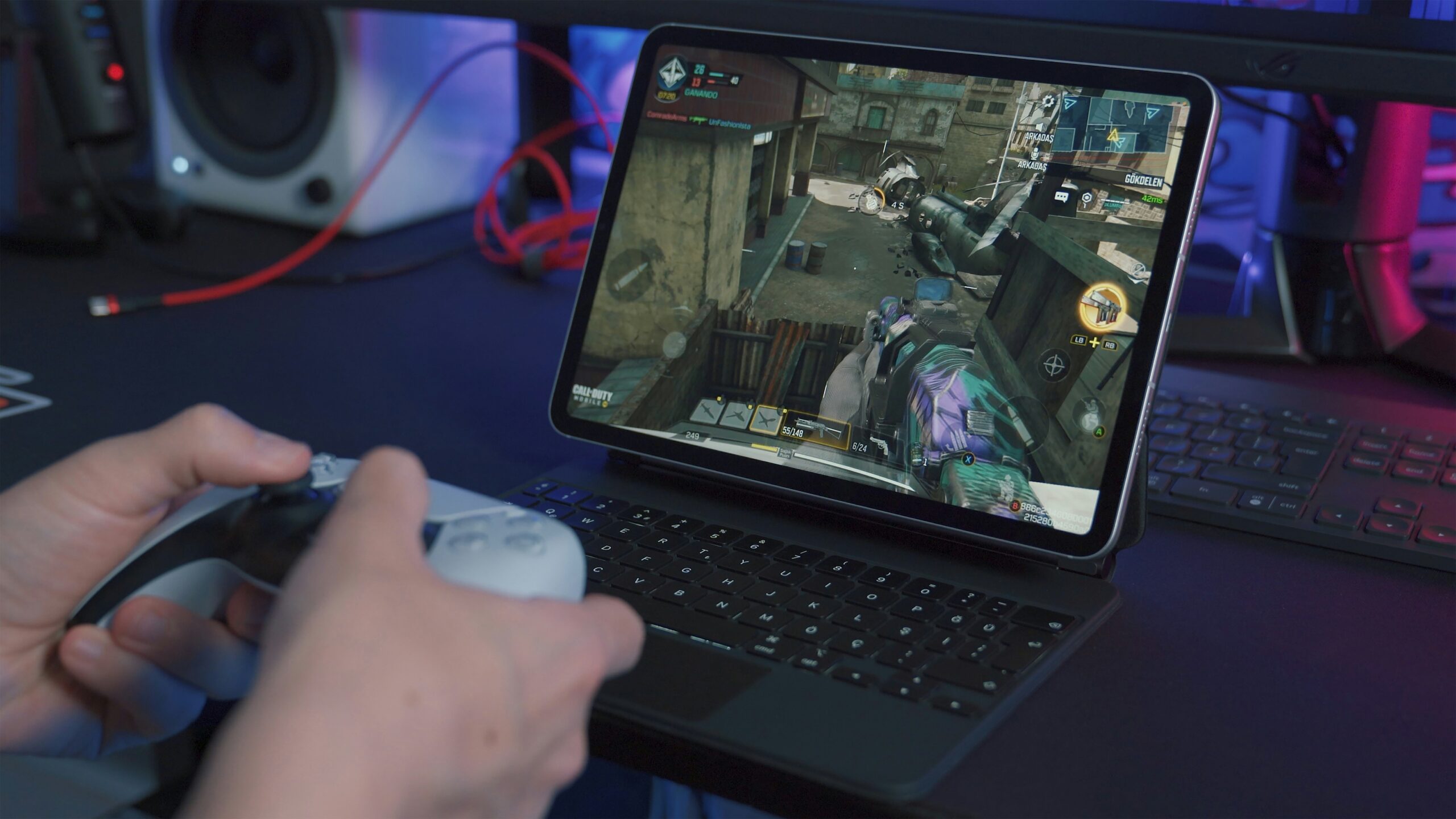
Professional mobile gamers now use specialized “trigger” attachments and cooling fans to maintain peak performance. The accessibility of mobile gaming means the talent pool is massive, making the competition fiercer than traditional PC leagues.
A. Spectator modes have been optimized for mobile, allowing fans to watch tournaments directly within the game app.
B. Ranked ladders use sophisticated “Elo” systems to ensure players are matched against opponents of equal skill.
C. Team-based strategy games (MOBAs) have pioneered the “short-match” format, packing deep strategy into 10-minute bursts.
D. Voice-chat integration is now a standard feature, allowing for real-time tactical coordination during intense team fights.
E. Local area network (LAN) play for mobile devices is becoming a staple at major gaming festivals and conventions.
E. AI and Machine Learning: The Intelligent Opponent
The “Artificial Intelligence” in older mobile games was often predictable and easy to exploit. However, the current generation of mobile strategy games uses machine learning to create opponents that adapt to your specific style.
If you always rely on a specific unit rush, the AI will learn your pattern and prepare a counter-strategy for the next encounter. This creates a “forever game” where the challenge never plateaus and the player is forced to innovate.
A. Adversarial neural networks are used to train AI that can play the game at a “Grandmaster” level.
B. Procedural content generation ensures that every tactical map is unique, preventing players from memorizing the best spots.
C. AI-driven “Diplomacy Bots” can negotiate with players using natural language processing to create realistic alliances.
D. Behavior-based AI allows NPCs to have “personalities,” such as an aggressive conqueror or a cautious pacifist.
E. Difficulty scaling is now invisible and dynamic, adjusting the challenge based on the player’s recent win-loss ratio.
F. Diplomacy and the Social Meta-Game
In mobile grand strategy, the game doesn’t end when you close the app. The “Social Meta-Game” involves players coordinating via Discord and Telegram to plan massive midnight invasions.
Alliances in these games can last for years, with players forming real-world friendships and professional networks. The depth of the game often comes from the human drama of betrayal, loyalty, and political maneuvering.
A. Global “Megaservers” allow thousands of players from different countries to inhabit the same persistent world.
B. Translation tools are built into the game chat, allowing for seamless diplomacy between players who speak different languages.
C. Seasonal “World Wonders” require an entire alliance of hundreds of players to contribute resources to build.
D. Spy mechanics allow players to infiltrate enemy alliances and sabotage their internal communications or resource banks.
E. Player-run “Parliaments” can set the rules for a specific server, creating a unique social experiment in every world.
G. Hybrid Monetization: Fair Play vs. Convenience
The “Pay-to-Win” (P2W) stigma of mobile gaming is slowly fading as developers move toward more ethical monetization models. Modern strategy titles focus on “Battle Passes” and cosmetics rather than selling raw power.
Fairness is essential for a game to survive as a competitive title. Players are more willing to spend money on a game where skill is the primary factor in victory.
A. Cosmetic skins for units and bases allow players to express their personality without gaining an unfair advantage.
B. Subscription models provide “convenience” features, such as faster building or automated resource collection, without affecting combat stats.
C. “Fair-Play” servers are increasingly common, where all microtransactions are disabled and only skill matters.
D. Ad-supported rewards are often optional, giving free-to-play players a way to earn premium currency by watching a short video.
E. Limited-time events offer high-tier rewards that can only be earned through gameplay, not through direct purchase.
H. The Transition from Classic RTS to Auto-Battlers

The Real-Time Strategy genre has evolved on mobile into the “Auto-Battler” format. This sub-genre focuses on the “Preparation” phase—choosing the right units and positioning—rather than the fast clicking of a traditional RTS.
This “Tactical Management” style is perfect for mobile because it emphasizes long-term planning over mechanical speed. It allows players to experience the thrill of a massive battle without the stress of managing a hundred individual units at once.
A. Strategic positioning of units on a grid becomes the primary factor in determining the outcome of a battle.
B. Synergies between different unit “classes” or “factions” create a deep deck-building layer to the strategy.
C. Between-round “Shopping” phases require players to manage their economy and decide when to invest or save.
D. Global leaderboards for auto-battlers provide a quick way for players to see where they rank in the current “Meta.”
E. High-speed “Blitz” modes allow for a full strategic experience in under five minutes, perfect for quick breaks.
I. Cross-Platform Integration: The Unified Ecosystem
Mobile strategy is no longer an island. Many of the biggest titles now support “Cross-Play” and “Cross-Progression,” meaning you can start a game on your PC and finish it on your phone.
This unified ecosystem has forced mobile developers to maintain the same level of depth as PC titles. If the mobile version is “watered down,” players will simply stick to the desktop version.
A. Cloud-syncing technology ensures that your strategic map and unit levels are the same across all devices.
B. User interfaces are designed to be “Responsive,” changing their layout depending on whether you are using a mouse or a touchscreen.
C. Shared servers allow PC players and mobile players to compete in the same tournaments, proving that touch-controls can be competitive.
D. Integrated companion apps allow you to manage your empire’s economy on your phone while the “main” game runs on your console.
E. Developers now release major content updates simultaneously across all platforms to keep the community unified.
J. The Impact of 5G and Low-Latency Connectivity
Strategy games require a stable connection, especially when thousands of players are interacting in a real-time world. The global rollout of 5G has been a game-changer for mobile strategy dominance.
Latency, or “lag,” can be the difference between a successful ambush and a total defeat. 5G provides the near-instant response times needed for high-level competitive play in the pocket.
A. 5G allows for more complex “World State” data to be sent to the phone, enabling larger and more detailed battlefields.
B. Lower latency reduces the “input lag” between a player’s touch and the unit’s reaction on the screen.
C. Faster download speeds mean that massive content updates can be installed in seconds rather than hours.
D. Cloud-gaming services (like Xbox Cloud or GeForce Now) allow phones to run “Impossible” strategy games via the cloud.
E. High-bandwidth connections enable high-quality 3D voice chat and video streaming during gameplay.
K. Future Trends: AR and VR Strategy
The next frontier for mobile strategy is “Augmented Reality” (AR). Imagine placing a tactical map on your real-world kitchen table and moving your units with your hands.
Mobile phones are already equipped with the sensors needed for high-quality AR. This will transform strategy games from a 2D screen experience into a 3D “tabletop” experience that feels like playing a physical board game.
A. AR allows for “Shared Space” gaming, where multiple people in the same room can look at the same digital battlefield.
B. Spatial audio in AR strategy games makes it sound like the battle is actually happening around you.
C. VR “Spectator” modes for mobile e-sports will allow fans to stand in the middle of a digital warzone.
D. GPS-based strategy games (like “Pokemon Go” but with kingdom building) will turn real-world cities into conquerable territories.
E. Wearable glasses that connect to your smartphone will eventually replace the handheld screen for a more immersive experience.
L. Accessibility and the “Easy to Learn, Hard to Master” Philosophy
The hallmark of a great mobile strategy game is an intuitive “Onboarding” process. Because mobile players are often distracted, the game must explain complex mechanics in a way that is easy to digest.
Tutorials are now interactive and story-driven, teaching the player through action rather than long walls of text. This approach has expanded the strategy genre to millions of people who previously thought it was too complicated.
A. Contextual “Hints” appear only when the player is struggling with a specific mechanic.
B. Practice modes with “Sandboxed” resources allow players to test out new strategies without risking their main account.
C. Simplified “Auto-Manage” toggles allow new players to focus on one aspect of the game while the AI handles the rest.
D. Color-blind modes and adjustable text sizes ensure that the game is accessible to players with different visual needs.
E. Community-driven “Strategy Wikis” are often integrated directly into the game’s menu for easy reference.
Conclusion

The evolution of mobile strategy gaming is a testament to the incredible power of modern portable technology.
We have moved far beyond the era of simple puzzles and basic tower defense clones.
Today’s mobile strategy titles offer a level of depth and complexity that rivals the most legendary PC franchises.
Touch-based interfaces have matured into a sophisticated and intuitive method for commanding digital armies.
The global competitive scene has proven that professional-level e-sports can thrive on a pocket-sized screen.
Hardware innovations like 5G and advanced NPUs have made massive, persistent worlds a reality for every smartphone user.
The social and diplomatic layers of these games create deep human connections that span across international borders.
Ethical monetization and cross-platform play are ensuring that the industry remains fair and accessible for all.
Artificial Intelligence is making our digital opponents more challenging and lifelike than ever before.
As AR and VR technology continues to mature, the way we interact with strategy games will only become more immersive.
The future of tactical gaming is undeniably mobile, and the entire world is now a potential battlefield in your pocket.