Reaching the pinnacle of competitive gaming requires far more than just quick reflexes or having the most expensive equipment on your desk. For many aspiring professional players, the journey from being a casual enthusiast to an elite competitor involves a complete overhaul of how they perceive and interact with game systems.
Modern competitive titles are designed with layers of hidden depth that only reveal themselves to those who study the underlying logic of the software. Mastering these elite mechanics means understanding the mathematical variables of movement, the precise timing of animation frames, and the psychological triggers of your opponents.
It is a transition from playing by instinct to playing with calculated intention, where every button press serves a specific tactical purpose. As the global esports scene becomes increasingly crowded, the margin for error has shrunk to nearly zero, making advanced mechanical knowledge a mandatory requirement for success.
This article will deconstruct the core pillars of high-level play to help you transform your approach to gaming. We will explore the technical nuances that separate the top one percent of players from the rest of the community. By the end of this deep dive, you will have a comprehensive framework for improving your consistency and dominating any digital battlefield you choose to enter.
The Science of Frame Data and Animation
In the world of elite gameplay, time is not measured in seconds but in frames, which are the individual images that make up the game’s motion. Most competitive games run at sixty frames per second, meaning a single frame lasts only about sixteen milliseconds. Understanding “frame data” allows you to know exactly how long an action takes to start, how long it stays active, and how much time you need to recover afterward. This knowledge is what enables players to perform “frame-perfect” maneuvers that look impossible to the untrained eye.
A. Startup and Active Frames
The startup phase is the animation before a move can actually hit or take effect, while active frames are the window where the move is dangerous. Knowing these values helps you decide which actions are safe to use in a scramble and which ones leave you too vulnerable. It turns a guessing game into a precise calculation of risk versus reward.
B. Recovery and Frame Advantage
After an action is completed, your character enters a recovery state where they cannot perform another move. If you finish your recovery before your opponent does, you have a “frame advantage,” allowing you to act first in the next sequence. Elite players always seek to remain “plus on block” or in an advantageous state to maintain pressure.
C. Animation Canceling Techniques
Many high-level games allow you to bypass the recovery frames of one move by immediately starting another specific action. This “canceling” significantly increases your output and allows for complex combinations that overwhelm an opponent’s defense. Mastering this requires muscle memory and an intimate knowledge of which moves can be linked together.
Map Control and Spatial Awareness
Mastery over your own character is useless if you do not understand the environment in which you are fighting. Map control is the art of occupying the most valuable areas of the arena to limit your opponent’s options while expanding your own. It involves a constant cycle of gathering information, predicting enemy rotations, and denying them access to critical resources or objectives. A player with superior spatial awareness can win a match even if their mechanical aim is slightly inferior to their rival.
A. Power Positions and High Ground
Every map has specific locations that provide a line of sight or a defensive advantage over the surrounding area. Controlling these power positions allows you to dictate the flow of the game and forces your opponent to take risks to flush you out. You must learn to recognize these spots instantly and understand when to hold them or when to rotate.
B. Information Denial and Fog of War
In many competitive titles, you can only see what is within your character’s immediate vicinity. Using abilities or positioning to stay hidden while keeping your opponent visible is a fundamental part of elite strategy. This information asymmetry creates “pressure” even when no combat is actually occurring.
C. Strategic Rotations and Flanking
Rotating is the act of moving your team from one part of the map to another to respond to changing threats or opportunities. A perfectly timed flank can catch an opponent off guard while they are focused on a frontal engagement. Understanding the timing of these movements ensures that you are always in the right place at the right time.
Decision Making Under Pressure
When you reach a high level of play, mechanical skill becomes a baseline that everyone possesses. At this point, the game is won or lost in the mind through “macro” decision making and the ability to stay calm during high-stress moments. Making the right choice in a split second requires a mental library of previous experiences and the ability to process multiple variables simultaneously. Elite players don’t panic; they analyze and execute with cold efficiency.
A. Conditioning Your Opponent
Conditioning is the process of training your opponent to expect a certain behavior from you, only to change it at the last moment. By repeating a specific pattern, you lure them into a false sense of security before unleashing a “mix-up” that they are not prepared to defend. This psychological warfare is what creates the “mind games” seen in professional tournaments.
B. Resource Management and Economy
Most competitive games involve resources like health, mana, ammunition, or in-game currency. Elite players track not only their own resources but also those of their enemies to find moments of weakness. Attacking an opponent when you know their primary defensive tool is on “cooldown” is a hallmark of intelligent play.
C. Adapting to the Meta
The “Meta” refers to the most effective tactics available at any given time, usually dictated by the latest balance patches. To stay elite, you must be a student of the game, constantly adjusting your strategy as the software changes. Being a “one-trick pony” who only knows one strategy is a recipe for long-term failure in competitive circles.
Optimizing Input Latency and Muscle Memory
Technical performance and physical habits form the foundation upon which all mechanical skill is built. If your system has high input lag, your character will always feel “heavy” and unresponsive regardless of your skill level.
Furthermore, developing “correct” muscle memory is essential so that your body can execute complex commands without your conscious mind interfering. This allows your brain to focus on the higher-level strategy while your hands handle the technical execution.
A. System and Peripheral Optimization
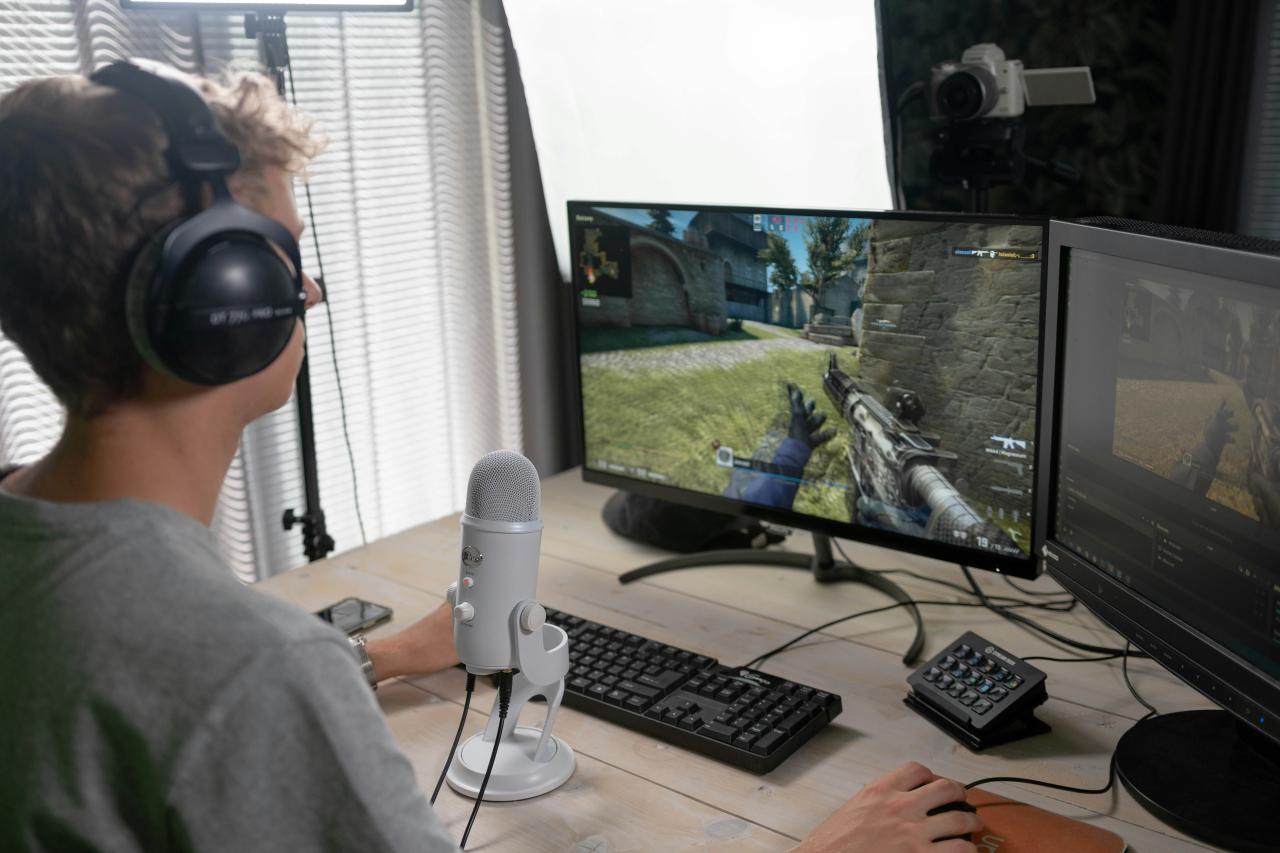
Reducing the delay between a button press and the screen’s reaction is vital for reacting to fast moves. This involves using high-refresh-rate monitors and mice with high polling rates to ensure the smoothest possible experience. A responsive system makes the game feel like an extension of your own body.
B. Deliberate Practice and Drills
Playing matches is not enough to reach the elite level; you must engage in focused drills that target specific weaknesses. Whether it is aim training, movement courses, or combo practice, deliberate repetition carves the necessary pathways in your nervous system. You should practice until you cannot get the move wrong, not just until you get it right once.
C. Ergonomics and Physical Health
Competitive gaming is physically demanding on the hands, wrists, and back. Maintaining proper posture and taking breaks to stretch is necessary to prevent injuries like carpal tunnel syndrome. A healthy body supports a fast mind, and long-term success requires a sustainable approach to your physical well-being.
Team Dynamics and Communication
For team-based competitive games, the ability to coordinate with others is the ultimate force multiplier. Even five individual superstars will lose to a coordinated team that communicates effectively and covers each other’s weaknesses.
High-level communication is not about chatting; it is about providing concise, actionable information that helps your teammates make better decisions. Mastering the social and strategic elements of teamwork is the final step in becoming a complete competitor.
A. Role Specialization and Synergy
Every team member should have a clearly defined role that complements the rest of the group. Understanding how your character’s abilities interact with your teammates’ allows for “wombat combos” that can wipe out an entire enemy team. Synergy is the secret ingredient that makes a team greater than the sum of its parts.
B. Concise Shot Calling and Pings
In the heat of battle, long sentences are a distraction. Using standardized callouts and in-game ping systems ensures that everyone is on the same page without clogging the voice channel. A single “shot caller” should lead the team during intense moments to avoid conflicting instructions.
C. Constructive VOD Review and Feedback
Analyzing your previous matches (Video On Demand or VODs) with your team is the fastest way to identify mistakes. Instead of blaming individuals, the focus should be on how the team’s system failed and how to prevent it next time. A culture of honest, ego-free feedback is what builds championship-winning teams.
Psychological Resilience and the Winner’s Mindset
The final barrier to elite gameplay is the “mental game,” or your ability to handle defeat and maintain focus over long periods. Competitive gaming can be incredibly frustrating, and “tilt” is a phenomenon where negative emotions cause a player to make poor decisions.
Developing a growth mindset allows you to see every loss as a learning opportunity rather than a personal failure. Resilience is the quality that allows a player to come back from a significant deficit to win the match.
A. Managing Tilt and Emotional Control
Learning to recognize when you are getting frustrated is the first step in maintaining your performance. If you feel your heart rate rising and your focus slipping, you need techniques like deep breathing to reset your emotional state. Staying “cold” under pressure is what allows for the most legendary “clutch” moments in gaming history.
B. Goal Setting and Incremental Progress
Instead of focusing only on your rank, set specific goals for each session, such as “improving my accuracy” or “better map rotations.” This makes the improvement process feel rewarding even if you lose a few matches. Small, consistent gains eventually lead to a massive leap in overall skill level.
C. The Importance of Sleep and Recovery
Your brain processes and solidifies the skills you learned during the day while you sleep. Depriving yourself of rest leads to slower reaction times and poor judgment, undoing all your hard work. Elite competitors treat their sleep and mental health with the same seriousness as their practice sessions.
Conclusion

Mastering competitive gaming is a deep and rewarding journey for those willing to put in the effort. It requires a perfect balance of technical knowledge, physical skill, and mental discipline at all times. You must become a student of the game’s internal mechanics to truly understand how to win.
Practice should be focused and deliberate to build the muscle memory needed for high-level play. Your environment and equipment play a vital role in how effectively you can execute your strategy.
Teamwork and communication are the ultimate tools for overcoming superior individual mechanical skill. Mental resilience is the shield that protects you from the inevitable frustrations of high-level competition. Every loss is a lesson that brings you one step closer to becoming an elite player.
The pursuit of excellence in the digital arena is a never-ending process of adaptation and growth. True mastery comes to those who are patient enough to build their skills one frame at a time.